




In the grand cycle of creation described in the Hindu scriptures, time is divided into four great ages, known as Yugas — Satya Yuga, Tretha Yuga, Dwapara Yuga, and Kali Yuga. Each Yuga represents a gradual decline of righteousness (dharma) and the rise of materialism and ego.
After the pure and truth-filled Satya Yuga, the second age began — the Tretha Yugam (Treta Yuga) — an era that shone with divine incarnations, noble kings, and the establishment of dharma through action and sacrifice.
The beginning of Tretha Yugam
Tretha Yugam was a time when the world had lost one-fourth of its original virtue. Dharma still flourished, but ego, desire, and pride began to emerge among beings. To restore balance and guide humanity, Lord Vishnu incarnated as Lord Rama, the embodiment of righteousness and truth.
This divine age saw the rise of great sages, kings, and warriors who lived by moral law and self-discipline. The world was filled with devotion, duty, and the pursuit of higher knowledge. Temples and yajnas were established everywhere, and Vedic culture thrived.
The Birth of Lord Rama
In this sacred era, King Dasharatha of Ayodhya performed the Putrakameshti Yagna, seeking divine blessings for children. From the holy fire emerged a celestial being carrying nectar, which was shared among his three queens — Kausalya, Kaikeyi, and Sumitra.
Soon, four divine sons were born — Rama, Bharata, Lakshmana, and Shatrughna — who were none other than the manifestations of Lord Vishnu and his eternal powers. Rama, born to Kausalya, was the Maryada Purushottama — the perfect man who upheld dharma in every situation.
The Ramayana – The Story of Tretha Yugam
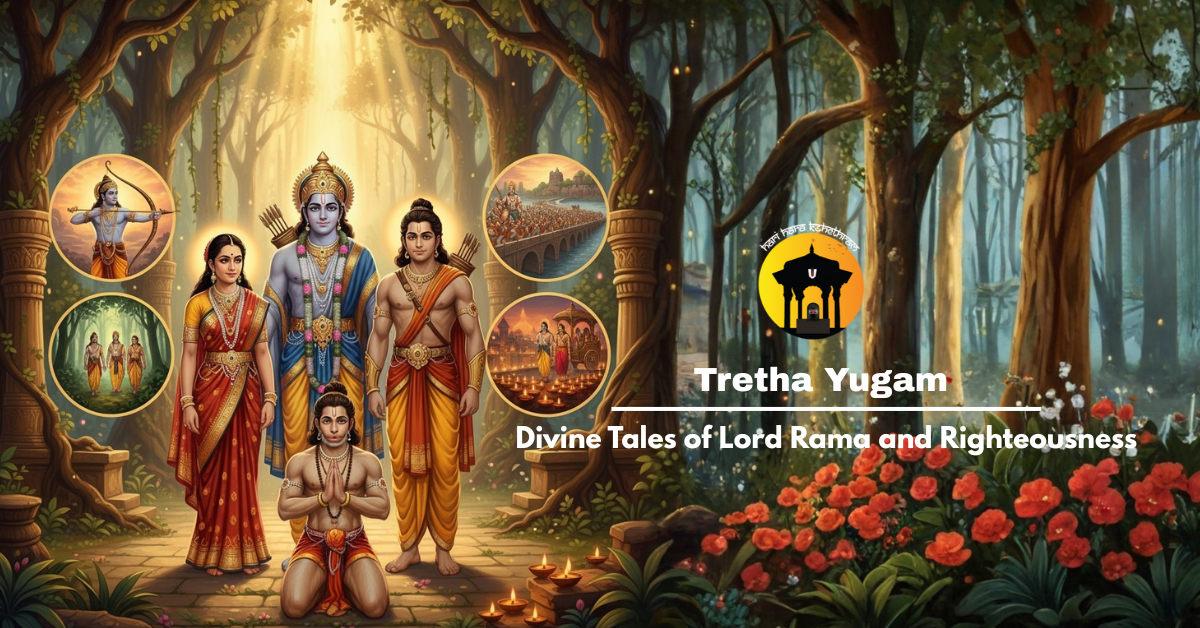
The Ramayana, composed by Sage Valmiki, narrates the divine play of Lord Rama in Tretha Yugam. From his youthful days of valor, where he broke Lord Shiva’s bow to marry Sita Devi, to his years of exile, every moment in his life became a lesson in virtue, patience, and devotion.
When Ravana, the ten-headed king of Lanka, abducted Sita Devi, the world trembled under his tyranny. To rescue her and restore dharma, Rama built an army of vanaras led by Hanuman and Sugriva. The great war of Lanka followed, where righteousness triumphed over evil.
After defeating Ravana, Lord Rama returned to Ayodhya with Sita and Lakshmana. The people celebrated his return with lamps and joy — the first Deepavali (Diwali), also known as Tretha Yugam Diwali, marking the victory of dharma over adharma and light over darkness.
The Teachings of Tretha Yugam
Tretha Yugam stands as a shining example of how dharma (righteous conduct) must guide every action. Lord Rama’s life was a model of perfect living — as a son, husband, ruler, and devotee. His reign, known as Rama Rajya, symbolized peace, prosperity, and justice for all beings.
The age taught humanity the importance of:
- Upholding truth and duty even during trials.
- Practicing compassion, humility, and patience.
- Living a life of service and devotion to God.
Tretha Yugam reminds us that even in a world touched by imperfection, divine light can still guide and uplift humanity.
Spiritual Legacy in Today’s Times
Though we now live in the Kali Yuga, the sacred energy of Tretha Yugam continues to bless devotees. Every recitation of the Ramayana, every Rama Nama, and every Diwali lamp kindled in faith revives the spirit of that divine age.
At Hari Hara Kshethram Temple in Austin, the message of Tretha Yugam lives on through Rama Pattabhishekam, Deepotsavam, and Lakshmi Puja — reminding devotees that Lord Rama’s light still shines in every heart that seeks truth and dharma.
FAQ’s:
1. What is Tretha Yugam and how is it different from other Yugas?
Tretha Yugam is the second of the four Yugas in Hindu cosmology — after Satya Yuga and before Dwapara and Kali Yuga. During Tretha Yugam, righteousness (dharma) existed in three parts out of four. It was an era of noble kings, divine incarnations, and great spiritual discipline. Unlike the pure Satya Yuga, Tretha Yuga saw the beginning of ego and material desires, but dharma still flourished through righteous rulers and sages.
2. Why is Lord Rama considered the main incarnation of Tretha Yugam?
Lord Vishnu incarnated as Lord Rama in Tretha Yugam to restore dharma and destroy evil. As the Maryada Purushottama (the ideal man), Rama lived a life of virtue, truth, and duty, setting a divine example for humanity. His journey, struggles, and victories in the Ramayana symbolize the triumph of righteousness over evil and the path of perfect conduct.
3. How is Diwali connected to Tretha Yugam?
The festival of Diwali (Deepavali) originated in Tretha Yugam when Lord Rama returned to Ayodhya after 14 years of exile and his victory over Ravana. The people of Ayodhya welcomed him by lighting rows of lamps, symbolizing the victory of light over darkness and good over evil. This event became known as Thretha Yugam Diwali, celebrated every year with devotion and joy.
4. What is the significance of Rama Rajya in Tretha Yugam?
Rama Rajya represents the ideal form of governance established by Lord Rama after returning to Ayodhya. It was an era of peace, prosperity, justice, and equality — where everyone lived in harmony and dharma prevailed. Rama Rajya remains an eternal symbol of ideal leadership and divine order that devotees aspire to recreate in spirit and values.
5. How can devotees experience the spiritual essence of Tretha Yugam today?
Though we live in Kali Yuga, the energy of Tretha Yugam can still be experienced through devotion and righteous living. Chanting Rama Nama (the holy name of Lord Rama), reading or listening to the Ramayana, performing Deepavali Puja, and participating in Rama Pattabhishekam or Deepotsavam help devotees connect with that divine era’s blessings and wisdom.
6. What lessons does Tretha Yugam teach humanity?
Tretha Yugam teaches the eternal values of truth, duty, humility, compassion, and devotion. Lord Rama’s life demonstrates that upholding dharma, even in adversity, leads to divine grace and peace. The era inspires all to live with integrity and faith, remembering that righteousness always prevails over evil.
7. How is Tretha Yugam celebrated at Hari Hara Kshethram Temple in Austin?
At Hari Hara Kshethram Temple, the spirit of Tretha Yugam is celebrated through sacred events such as Rama Pattabhishekam, Lakshmi Puja, and the grand Deepotsavam during Diwali. These rituals honor Lord Rama’s divine reign and remind devotees that his light continues to shine in every heart devoted to dharma.